




94. Developing a 10-year plan for the arable and horticultural sector
The UK Agri-Tech Centre serves as an enabling force within the UK’s agricultural innovation landscape, driving Agri-tech innovation and adoption through world-class facilities, expert knowledge and business support. The Centre aims to make the UK’s arable and horticulture industry more efficient, resilient and sustainable, to underpin business growth and support food security.
Kada were commissioned by the UK Agri-Tech Centre to carry out research with experts and key opinion leaders to look at how innovation and its adoption in the UK’s arable and horticultural sectors will transform production systems over the next 10 years, combining cutting-edge technology with resilient practices.
The Kada team carried out a rapid evidence review to identify emerging trends and future areas of innovation in addition to 18 scoping interviews with sector experts from across the UK’s Agri-Tech industries to capture various views around short- and long-term innovation needs and opportunities. The team also facilitated three workshops to discuss low and high impact needs and opportunities.
The final report identified three areas of focus for future opportunities:
- Climate change: Advancements in biotechnology and specifically gene-editing, presents opportunities to build more climate-resilient crops for the future, alongside sustainable inputs to help conventional crops cope with biotic stresses.
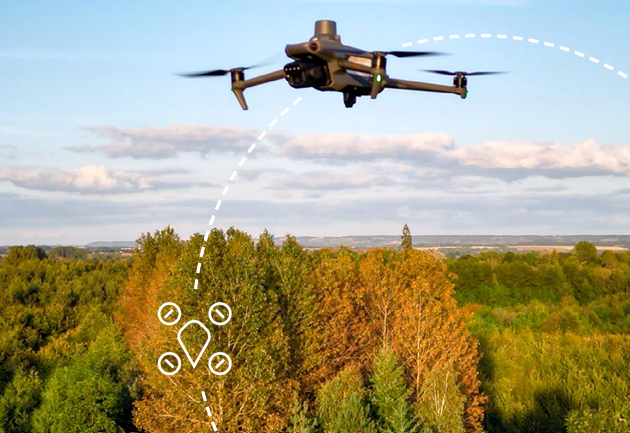
- Automation and digital technologies: Further adoption of autonomous machinery, robotics and drones will be required to drive efficiency gains. Precision farming could be accelerated by integration with better sensor data, connectivity and crucially AI technology. Together these would help future farmers make sense of highly variable and disparate data in real-time, for better decision making leading to more positive outcomes and impact.
- New production methods: Controlled Environment Agriculture (CEA) has the potential to contribute an extra £300 million in fruit and vegetable production, helping strengthen food security and sector resilience to global challenges. Alongside new production systems there are also opportunities for new crops, both within a CEA and wider arable setting.
The report also outlines four innovation pathways setting out a short, medium and long-term vision for the arable, horticulture, viticulture and other diversified activities for the next 10 years;
- Intelligent and data-driven agriculture
- In the short term: focus on improving deployment and use of advanced Internet of Things sensors, alongside examining AI-powered decision- making tools in precision agriculture.
- In the medium term: scale robotics and integrate more advanced AI applications across diverse farming systems and landscapes.
- The long-term vision includes predictive modelling and digital twins to enable automated and adaptable decision making.
- Climate resilience and biotechnology
- Short term: improve integration of sensor technologies with biological approaches to pest and disease management.
- Medium term: focus on scaling new novel solutions such as bacteriophages, RNA interference and microbiome engineering approaches.
- Longer term: develop dynamic plant breeding platforms for resilient traits and durable resistance to pests and diseases.
- Regenerative farming and Agri-tech
- Short term: accelerate, scale and optimise precision technologies, within existing systems, while examining functional changes in the soil microbiome and carbon sequestration.
- Medium term: build soil functionality through bio-based solutions and inputs, alongside practices such as polyculture and minimum or no-till systems.
- Longer term, these approaches can be brought together into a new toolkit that integrates biological systems and technologies to support productivity, resilience and improve ecosystem services.
- New and diversified production systems
- Short term: enhance year-round productivity and resource use efficiency by applying circular systems in CEA production.
- Medium term: augment this with tailored high-performance varieties and expand the range of commercially viable crops within CEA.
- Longer term, this will diversify urban-rural food production systems, including new crops for protein, fibre, pharmaceuticals and other green factory purposes.
You can read the report (titled The future of arable and horticulture innovation) in full on the UK Agri-Tech Centres website here: https://ukagritechcentre.com/news-insights/reports-and-brochures/
If you would like to work with us, talk through an idea or hear about this work you can contact us at info@kadaresearch.co.uk